oil pump versions NX650 XR600 XR650L

Open for English requests from all countries!
Antworten
Benutzeravatar
scrambler
Site Admin
Beiträge: 9500
Registriert: Fr Sep 14, 2012 8:50 am

oil pump versions NX650 XR600 XR650L

Beitrag von scrambler »

Hi there,
Since I was frequently asked by English native speakers about NX650 issues I decided to open a NX650 sub-forum to answer all questions, no matter English or German ;-)
So the first issue is the question about the right oil pump, which is very easy to answer at this time, since only two oil pumps are available - all other versions are out of stock and outdated (for reasons I will explain in a later article) anyway.
One of the oil pumps still available is OEM 15100-MY6-670 – it was used in NX650 1993-1995, XR600 1991-2000 and all XR650L. Earlier versions of these models can also use this pump with the short dowel pins 8x14.
The other pump is OEM 1500-MAN-690 for NX650 96-99 and all SLR/FX/FMX. This pump is, in my opinion, no improvement (which I also will explain later).
Cheers, Michael

Bild
sauve qui peut
Benutzeravatar
scrambler
Site Admin
Beiträge: 9500
Registriert: Fr Sep 14, 2012 8:50 am

wet sumping of RFVC engines

Beitrag von scrambler »

When the NX650 Dominator was introduced end of 1987, Honda claimed that its engine was a huge improvement over the past XR/XL 500/600 versions. However, the engine was taken almost unchanged from the first RFVC version, the 1983 XR500. The oil pump was still the same – and some parts (e.g. check valve) never changed during NX650 production. However, already the 600er versions got problems with the lubrication system – excessively high oil consumption (up to 2l /1000km) and ruined rockers/camshafts were common (e.g. http://www.xl600.de/cms/uploads/media/f ... ertest.pdf).

In retrospect it’s obvious, that an oil pump, which was designed for a 500cc, 34 hp engine, might be still sufficient for 600cc, but with 650cc, 45 hp it´s simply overwhelmed.

Knowing this, it’s not surprising that Honda several times changed the design of the NX650 oil pump. The first change occured 1988, already a few months after the introduction of the NX650, during the running production (something Honda usually avoids at all costs). The oil pump got seals at the pump shaft to minimize leaking. Before that, the so-called wet sumping was common – after killing the hot engine, the oil-level in the frame reservoir dropped due to leaks of the oil pump. It was often claimed that this kind of standing engine wet sumping is not critical, and actually the RFVC engine can survive with it for a long time.

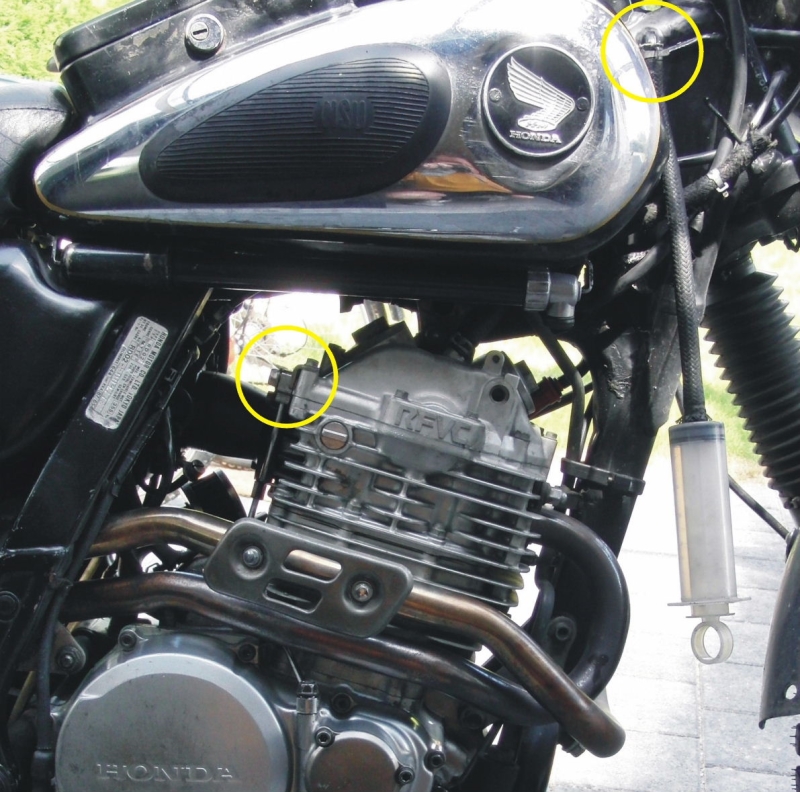
The problem however is that (without an oil-sight tube http://up.picr.de/16668645wv.jpg?rand=1426349036) no one can tell it apart from the more dangerous wet sumping that occurs when the engine is running. According to theory, an intact oil pump should always keep a high oil level in the frame reservoir, otherwise the oil accumulates in the crankcase, turning the dry sump into an wet sump. The engine is getting rid of the excess oil by blowing it out of the crankcase blower (the oil is sucked in by the carb and burned), thus causing excessive high oil consumption. Exactly this happened to me a few years before Langer’s experiments (see below). While going at a fast pace and engine oil 4000km in use I suddenly had an oil consumption of more than 1,5l/1000km. After the next oil change and at a more moderate speed the consumption was back to normal (about 0,3l/1000km). And I was lucky; rockers/camshafts were still ok.

Wet sumping was already well known by drivers of brit bikes http://www.britbike.com/forums/ubbthrea ... ber=116070

That the running engine wet sumping could also possibly be an issue with Hondas was not known until a few years ago. A guy from our German Dominator forum with the nick Langer, a (“Langer” means “the long one”) was sucked up by the oil-checking procedure and developed an oil sight tube to check it on sight (http://www.technologyplace.de/nx650/), even during driving (not recommended ;-)).

With that gadget, he noticed that the oil in the frame reservoir sometimes vanished during driving. As an engineer he was challenged and started to do some experiments with the dismantled oil pump. He discovered that the oil-pump (depending on oil temperature and oil wear) may show temporarily internal (along the pump shaft) and external leaks (between the body parts of the pump). For instance, the leaking was stronger with higher oil temperatures and with oil that was already 5000km in use, whereas with new oil, there was almost no leaking (which would explain the short changing intervals of 3000km given by Honda) as long as he did not exceed a certain temperature.

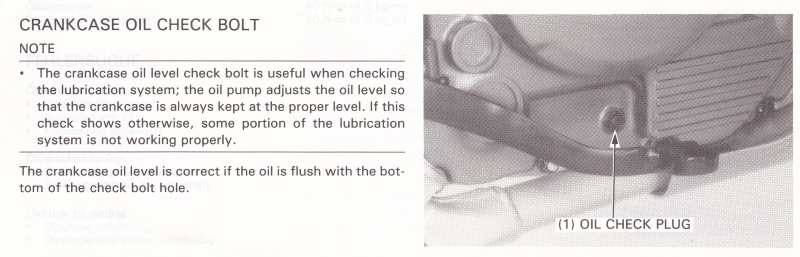
The mean thing is that after disassembling, the wear of the pump was still within the limits of the factory manual. So no chance at all to recognize a bad pump by simply measuring the wear. All of a sudden, we had the explanation, why so many RFVC engines died with cylinder head damage - leaking oil pumps and/or drivers, which overrun the oil changing intervals and overheat the engine. So wet sumping that occurs even with fresh oil is dangerous and a clear indication that the oil pump is not working properly and one should consider changing the oil pump. That wetsumping could be an issue must have been known by Honda - an indication is the oil check plug at the clutch cover.
Bild

But back to the question, which oil pump to choose. In 1993, the next evolutionary step was the introduction of reinforcements (likely to minimize leaking) of the oil pump body parts. This pump with the oem number 15100-MY6-670 was stock in 1993-1995 NX650 and all XR650L.

Bild

Finally, the last version 15100-MAN-690 was introduced in 1996 and used in all following RD08, SLR650 and FMX650. The rotor of the frame pump was strengthened by 50% (to counteract the wet sumping), but at the same time, Honda eschewed the oil seals. Why remains unclear; a reason may be that without seals, the oil pump is able to vent itself after running dry. With oil seals, it may occur (IMHO only when mounting a new, dry oil pump) that the pump may not get rid of the internal air and subsequently does not deliver. A hint for that theory is this service bulletin from September 1988 when Honda described how to vent a pump with oil seals.

Bild

I got only one experience with the last version of that sealless oil pump. For my red scrambler (http://up.picr.de/16320537nd.jpg) I used an almost new FMX650 engine with only 18.000km – and I noticed that even with that low mileage, the engine already showed signs of (standing engine) wet sumping. I haven’t tried what would happen at higher mileage, but from experiment I know it will get worse. Not surprisingly, there are many reports of FMX650 with high oil consumption and ruined rockers/camshafts.

Bottom-line: the pump of choice for all NX650 up to 1995 is OEM 15100-MY6-670 because of its oil seal wet sumping is reduced to a minimum (as long as it’s not worn out, of course ;) ).
sauve qui peut
Benutzeravatar
scrambler
Site Admin
Beiträge: 9500
Registriert: Fr Sep 14, 2012 8:50 am

oil pump upgrade NX650 Dominator

Beitrag von scrambler »

I needed an engine for my Black Bomber viewtopic.php?p=12399#p12399 – of course, only a 1988 engine with a kickstarter would do. It looked pretty good on the outside, had done 90,000 km, and was supposedly problem / noise free. But with this high mileage, I'd always replace the oil pump on a 1988 model.

If the engine is still installed, I would base my decision to replace the oil pump on wet sumping. If the oil level in the tank stays constant overnight, nothing needs to be done - if it aint broken, don't fix it. However, if the oil level drops quickly after the engine has been turned off, or if oil consumption fluctuates greatly, I would take action. Wet sumping itself will not damage the engine. There is just a lot more oil in the engine casing than intended, which means the oil pump still has more enough to suck. The extremely high oil consumption that results is dangerous, however, because anything over 0.5l is expelled from the crankshaft through the breather. And with only 0.5l of oil left, the engine quickly overheats and eventually seizes.

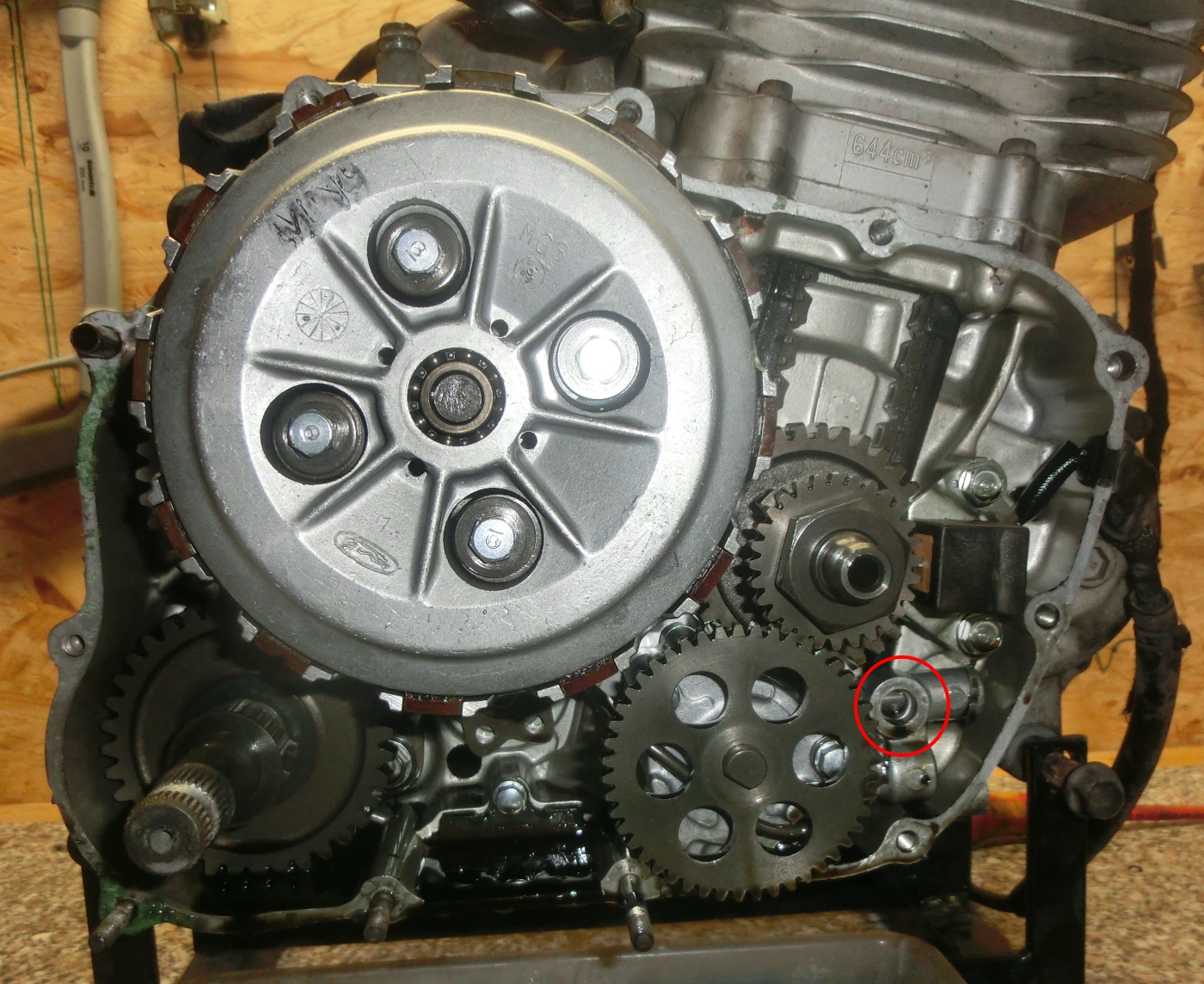
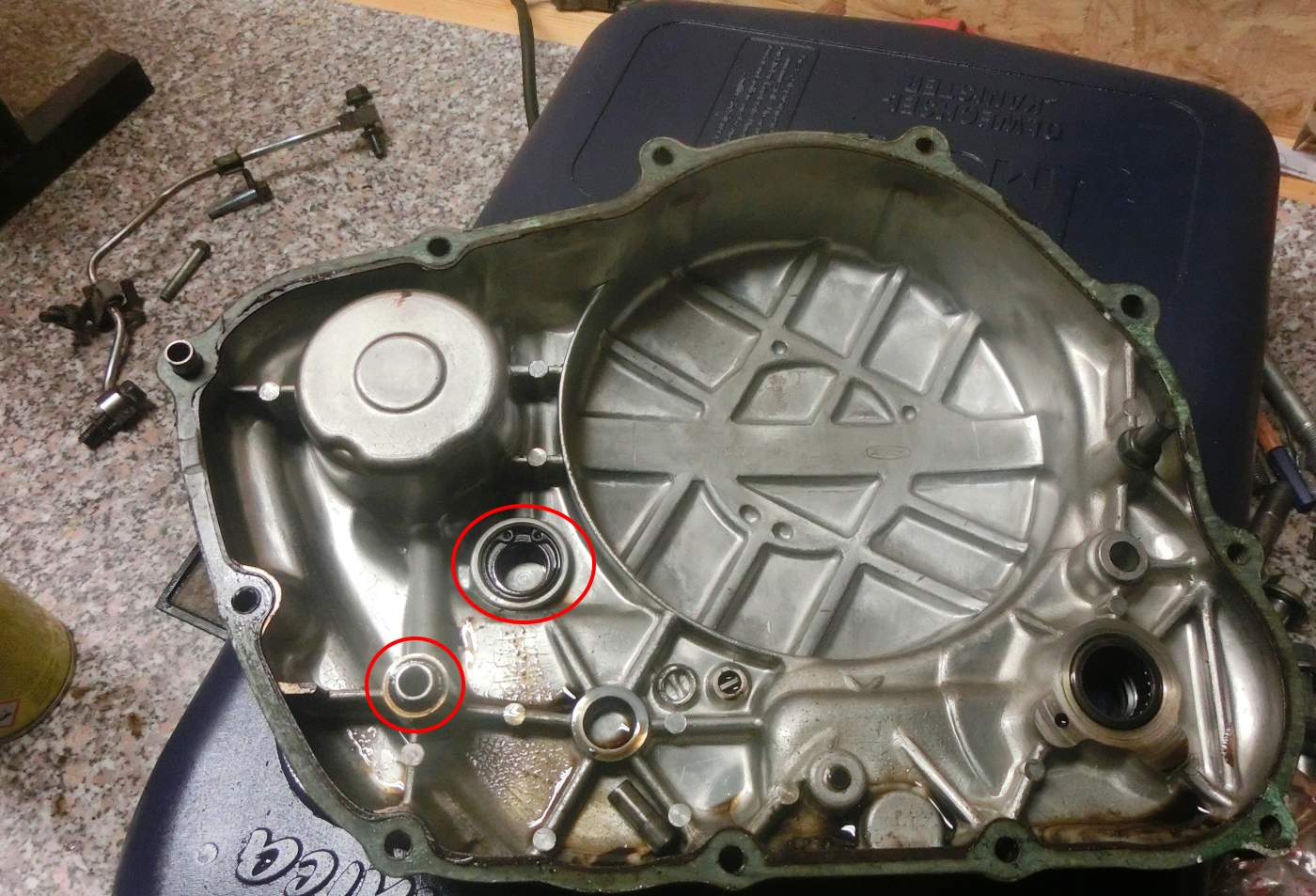
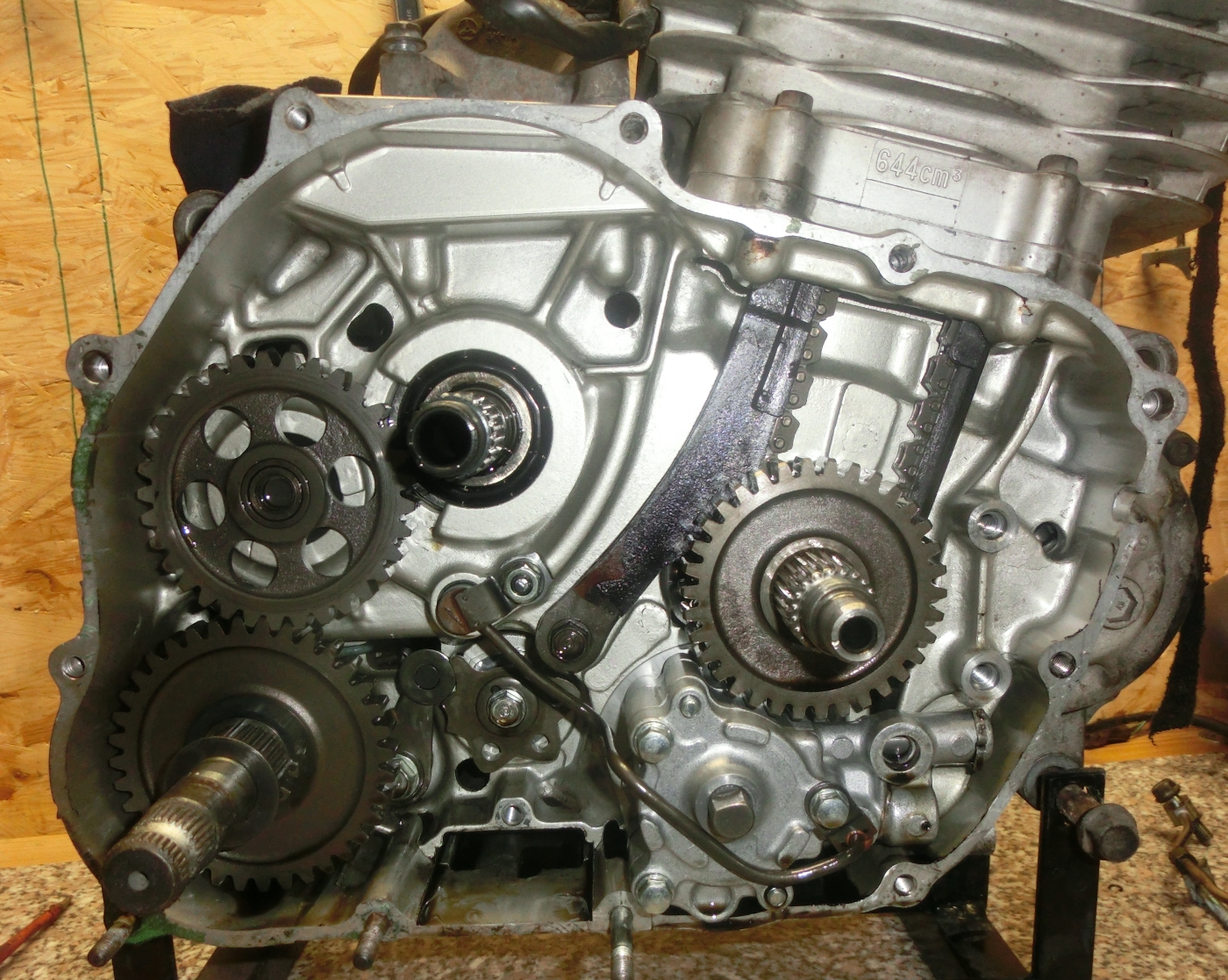
So, first, I'll take off the clutch cover. The o-ring and aluminum sleeve on the oil pump were missing

Bild

But it was in the clutch cover, so no worries. While you're at it, check the crankshaft seal (secured with a snap ring) – it may be hardened/damaged and should be replaced.

Bild

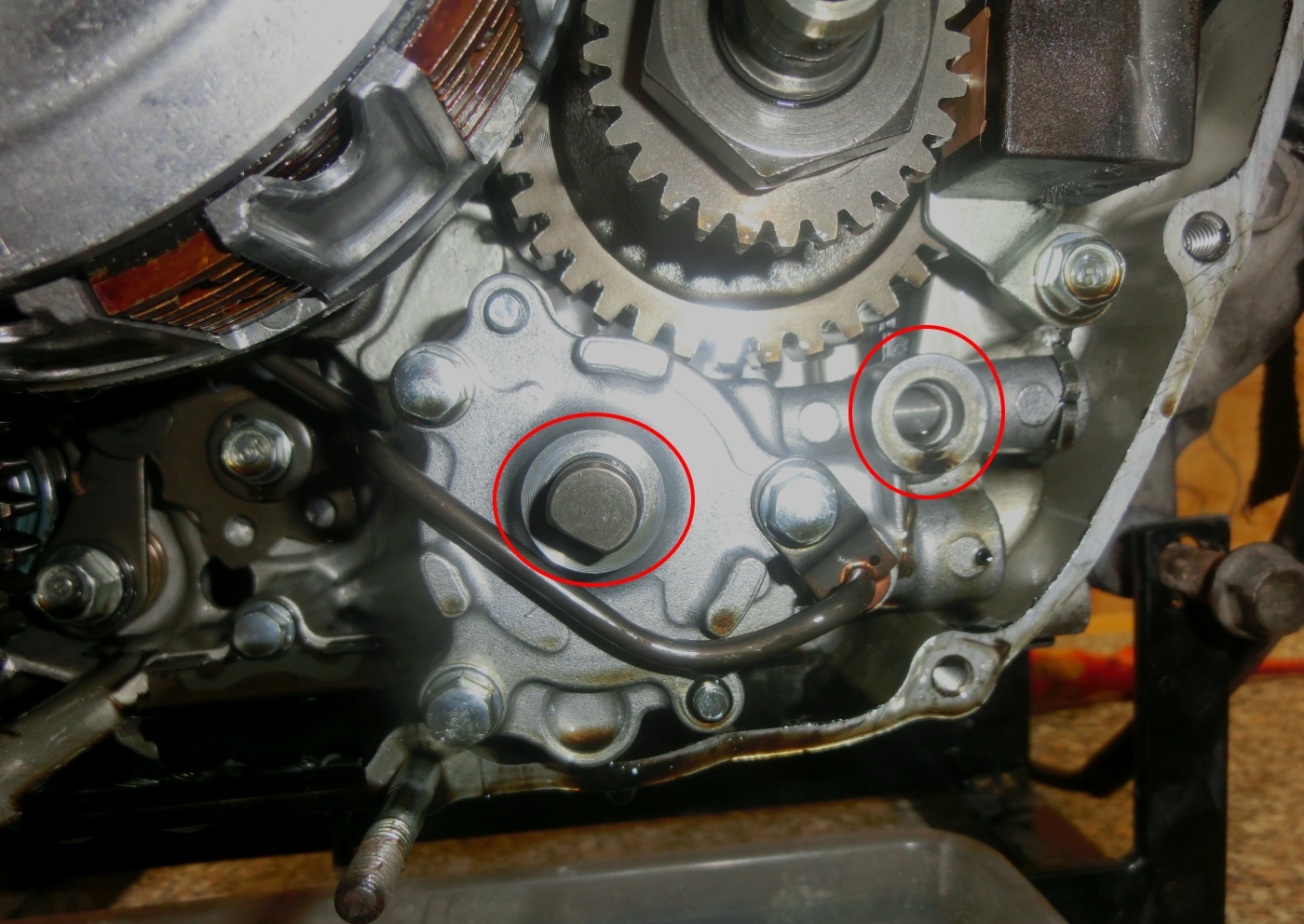
The first version of the oil pump lacks a seal on the pump shaft (see first post om top). The check valve to the right of it is free of any grooves. In the past, wet sumping was often attributed to a jammed check valve, but this is probably a very rare occurrence.

Bild

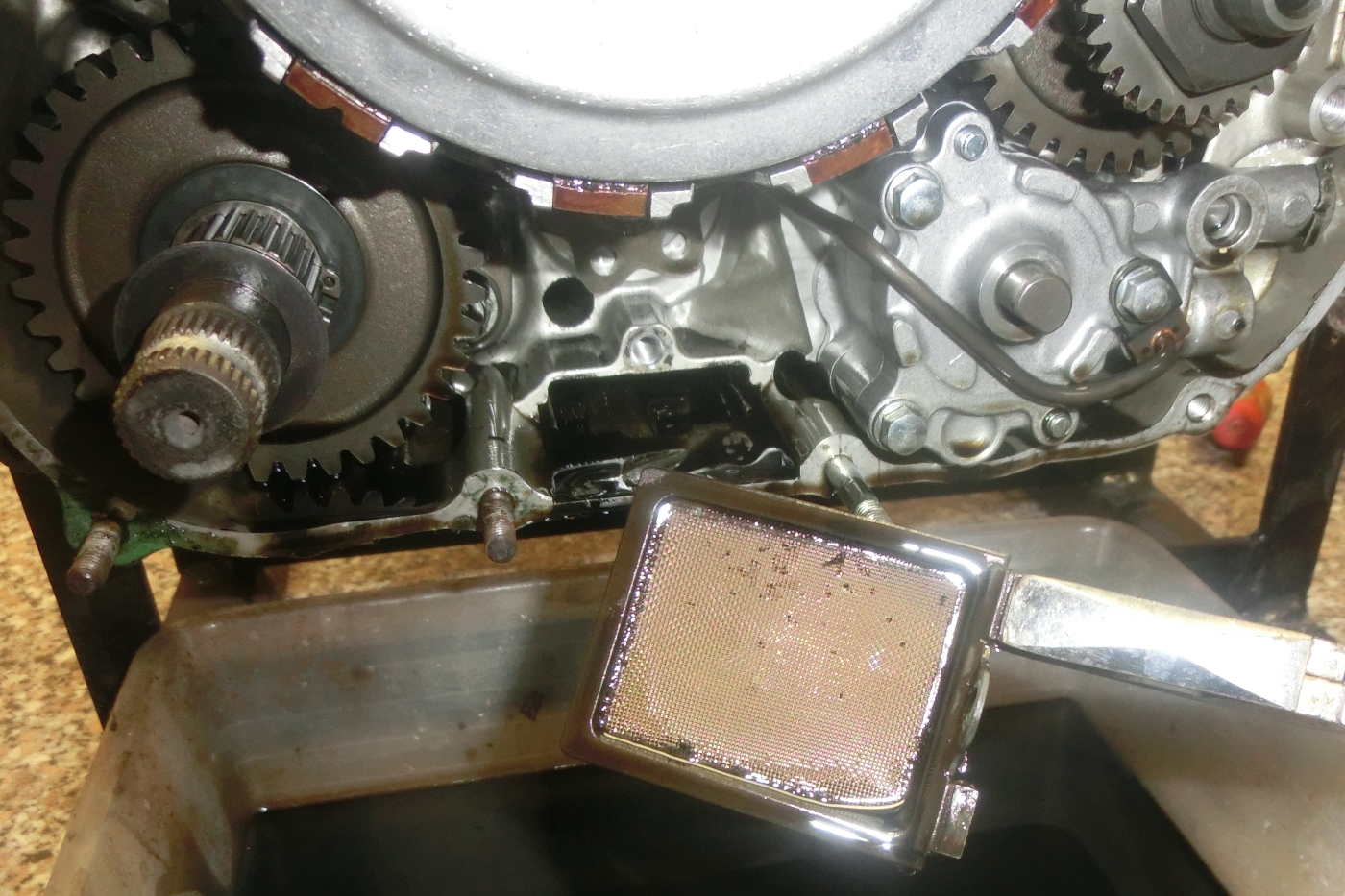
Then things got interesting – when an engine fails, there are usually plenty of shavings in the oil strainer. But here, there were only tiny black crumbs. A test with a magnet revealed that these must be plastic parts from the timing chain tensioner. Great, this significantly increases the chances of using the engine without completely disassembling it. Iron filings (from the transmission) or gold-colored flakes (from the crankshaft bearings) might also have been found.

Bild

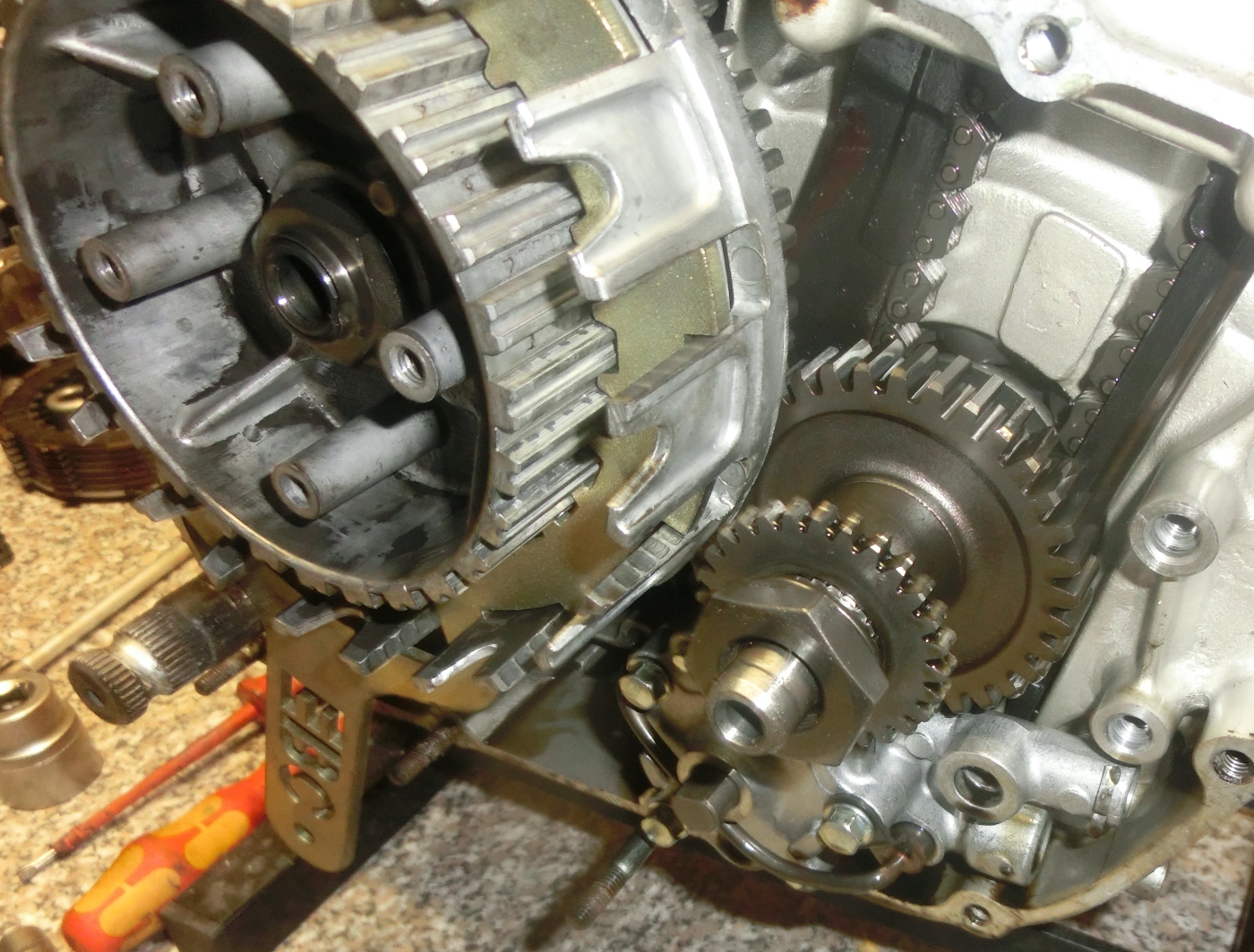
You could also remove the oil pump without removing the clutch by pushing the oil line slightly to the side. However, it's probably better to remove the clutch (see NX650 clutch workshop with poster viewtopic.php?p=33619#p33619) . For that, you'll need a clutch basket holder. I highly recommend not using homemade holders that attach to the four aluminum tubes – they're a risk of breakage. Guess how I know that.

Bild

Now the oil pump can be removed. The timing chain on another engine lasted 150,000 km, but it was already rattling and had stretched considerably—so at 90,000 km, it's probably better to replace it (howto change the timing chain on a NX650 motor viewtopic.php?p=15477#p15477).

Bild
sauve qui peut
Benutzeravatar
scrambler
Site Admin
Beiträge: 9500
Registriert: Fr Sep 14, 2012 8:50 am

Re: oil pump upgrade NX650 Dominator

Beitrag von scrambler »

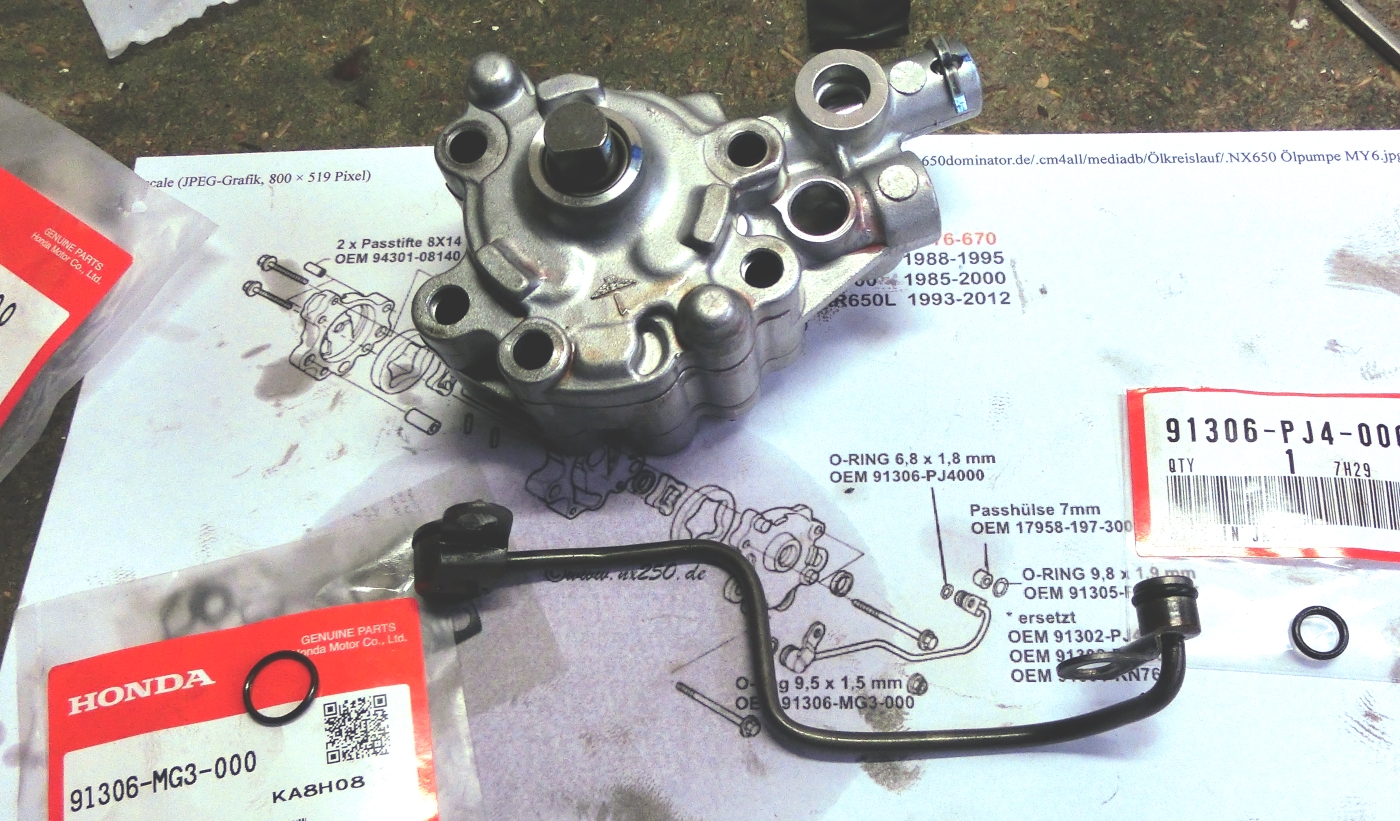
To install the new MY6 oil pump you need two 8x14mm dowel pins (see picture for spare part number). The pins of the old oil pump are too long.

It would also be advisable to replace all O-rings, there are improved replacement parts available.

Bild

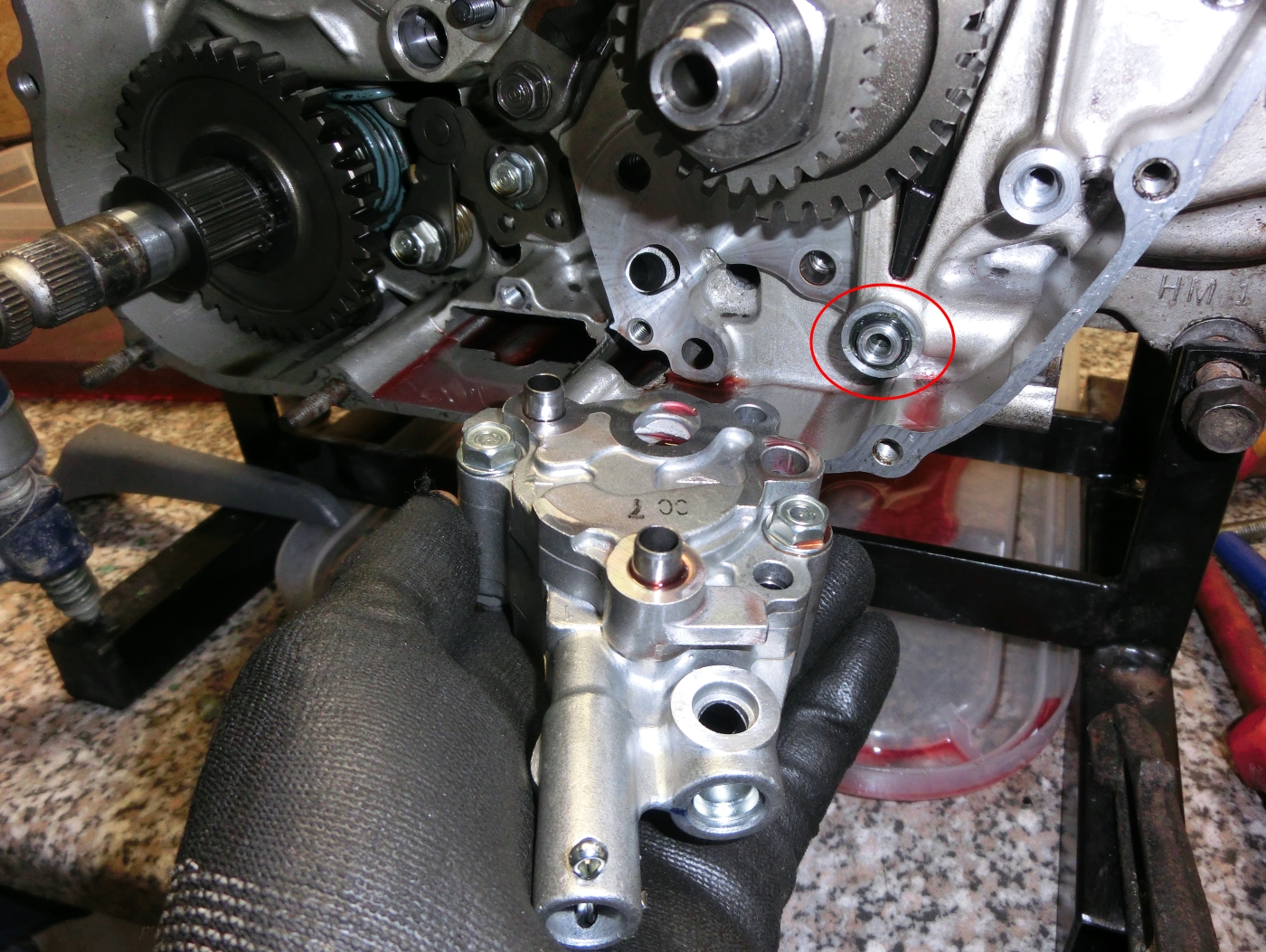
The MY6 oil pump is secured with hex bolts that have a larger head. This can be stuck on the '88 engine case and should therefore be ground down by 1/2 mm.

Bild

Here you can see that the head of the bolt has left a groove in the motor housing, slightly ground down it no longer has contact

Bild

It only seems to affect engine cases from 1988; a case from 1990 has enough clearance.

Bild

Bild

Once all the O-rings are in stock, you can start installing the MY6 oil pump.

Bild
sauve qui peut
Benutzeravatar
scrambler
Site Admin
Beiträge: 9500
Registriert: Fr Sep 14, 2012 8:50 am

Re: oil pump upgrade NX650 Dominator

Beitrag von scrambler »

Before installing the oil pump, the aluminum sleeve and O-ring are glued in place with some grease to prevent them from falling out. The oil pump is filled with oil (see the Honda bulletin above!), the two short 8x14mm dowel pins are inserted, and then plugged into the engine housing.

Bild

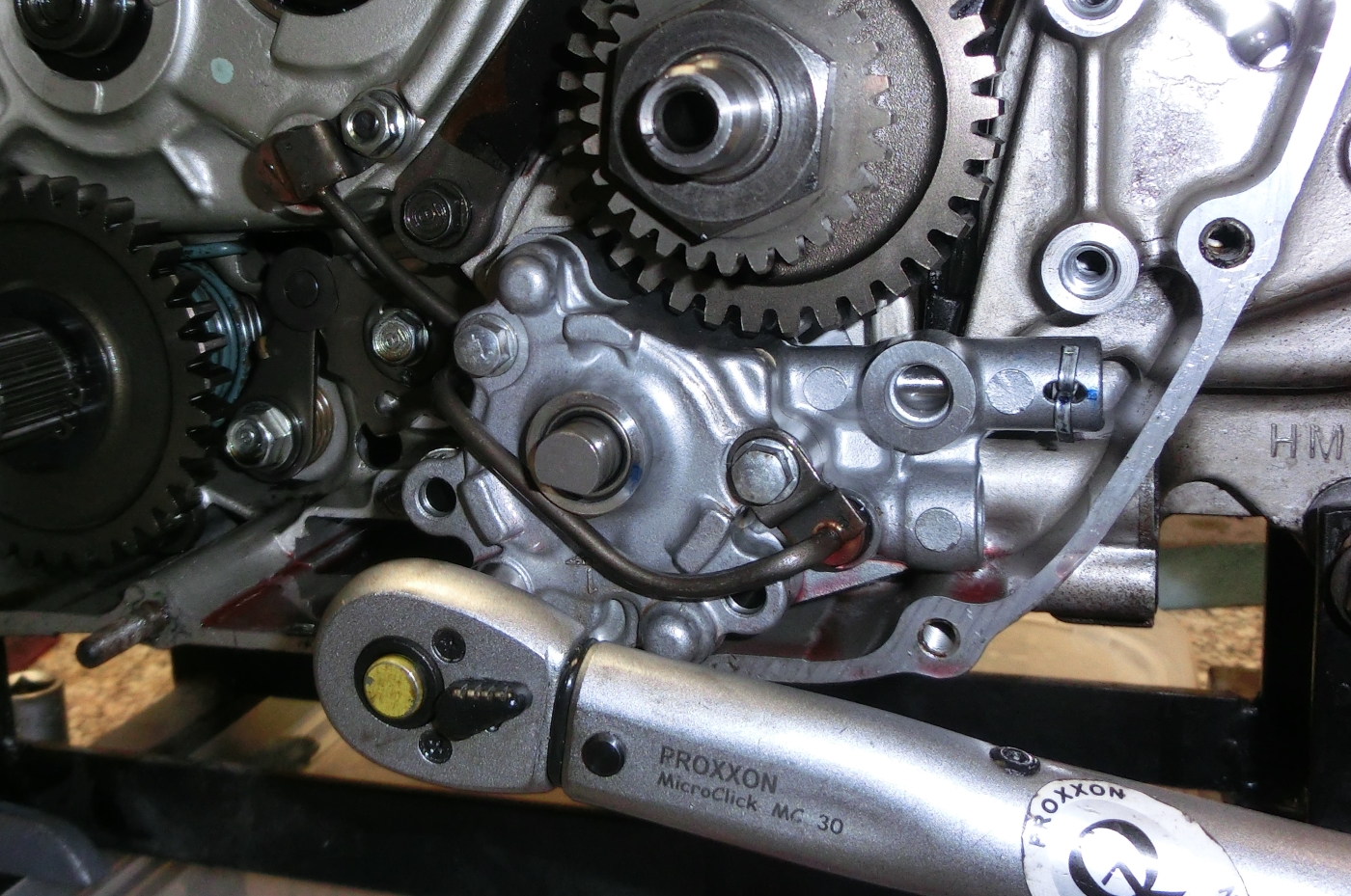
Then, the three oil pump retaining screws are tightened in several steps. The service manual doesn't specify a tightening torque, so 10 Nm is probably the recommended torque for 6 mm screws.

Bild

Now the clutch can be reinstalled. The clutch discs are very durable and rarely wear out, but the clutch springs barely last 50,000 km. Aftermarket springs are harder and don't last any longer, so only use original ones.

The aluminum sleeve/oring on the oil pump is also glued into the oil pump with a little heavy-duty grease. The crankshaft stub also receives a little grease to prevent damage to the new shaft seal in the clutch cover when sliding it on. The cover gasket is also greased to prevent slippage and make it easier to remove the next time you replace the clutch springs.

Bild

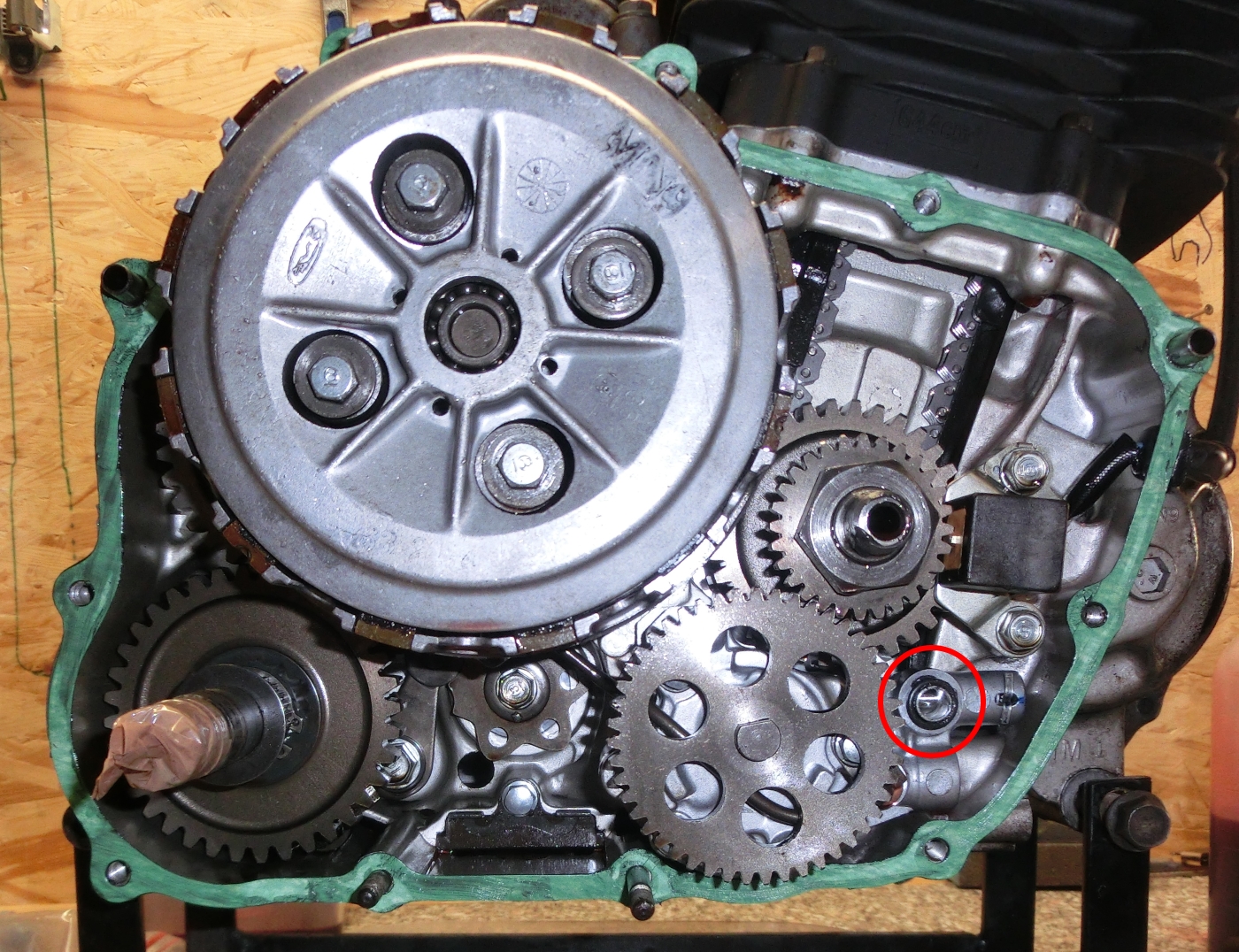
After installing the cover and tightening the bolts (10Nm), the oil filter chamber is filled with oil.

Bild

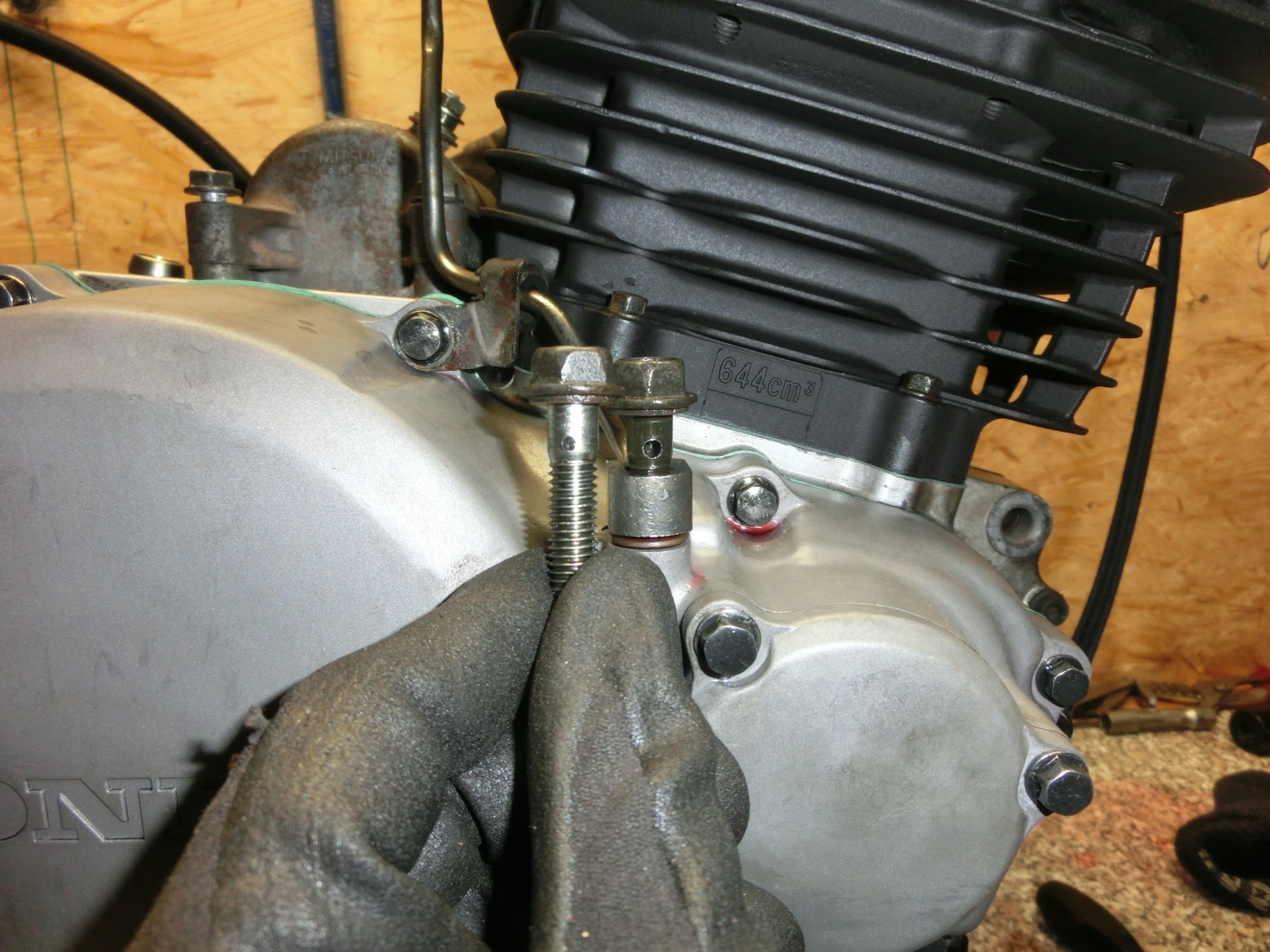
Finally, avoid a common pitfall : the hollow screws on the oil line have different bore diameters. The screw with the larger holes should be at the bottom.

Bild

After filling the oil, it's important to check whether the oil pump is working properly. Air in the pump prevents this. Old workshop manuals state that, when changing the oil, you should continue to turn the engine after draining it to remove any remaining old oil. This worked with the old oil pumps without shaft seals, but the new pumps are too tight, and the air can't escape! This can quickly lead to piston seizure.

If the oil tank is full, the oil level should drop significantly after starting, this is a sure sign that the oil pump is working - see video, the oil level is shown in the sight glass.


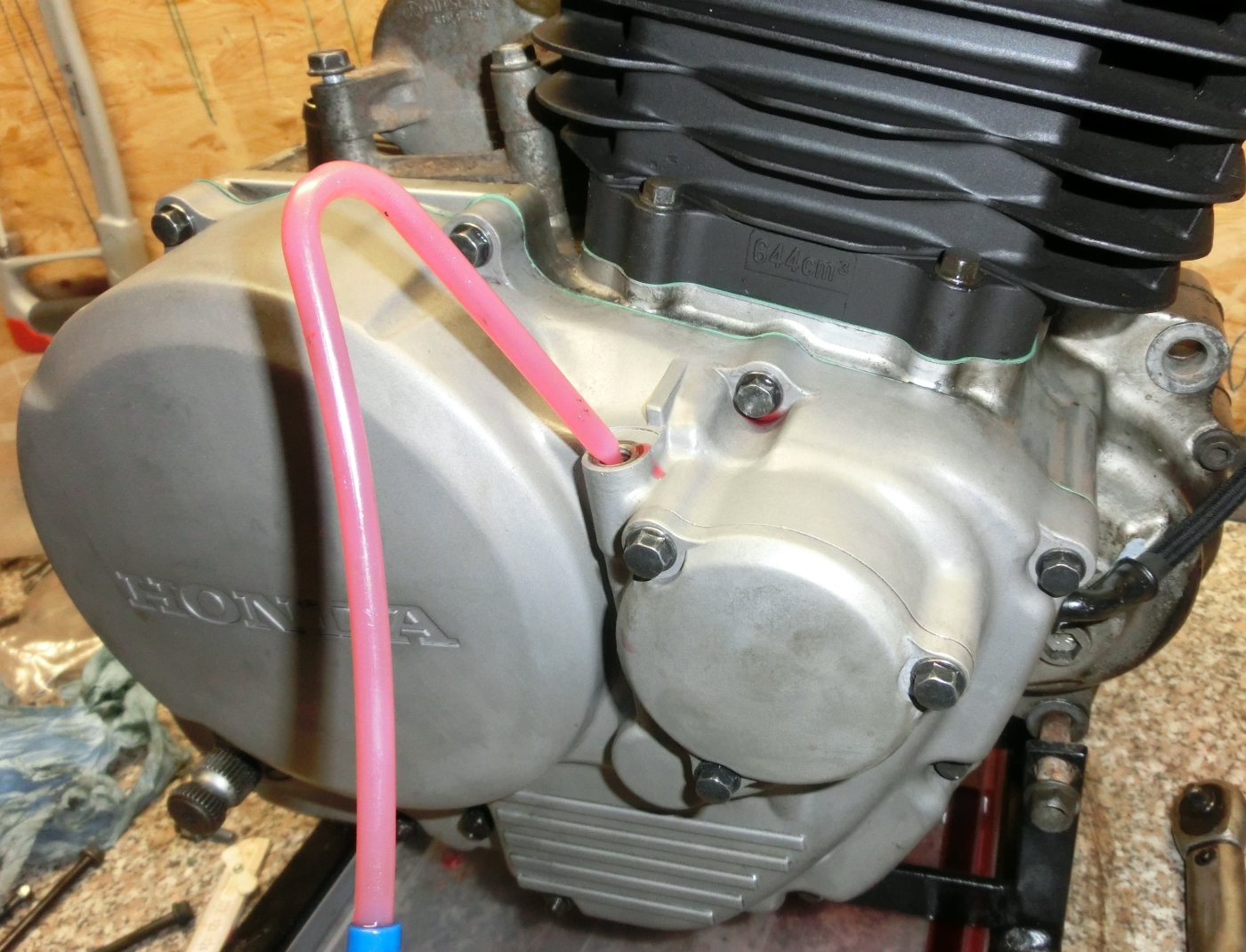
If you want to be on the safe side, you can also slightly loosen the upper banjo bolt of the oil riser; oil should flow out immediately when the engine is running. Otherwise, apply some pressure to the oil tank via the overflow hose.

Bild
sauve qui peut
Antworten